

A client emails your agency on a Tuesday morning asking if you can handle their SEO. You do not have an SEO team. Hiring someone before you have even signed the client is unrealistic, and turning down the work means losing revenue and possibly the whole account.
This is the exact moment white-label SEO exists to solve. It is why more agencies in 2026 are offering SEO without building the delivery capability themselves.
In this guide, we will cover what white-label SEO actually is, how it works, what it typically includes, and how agencies use it to grow, so you can decide whether it is the right move for your agency.
What Is White-Label SEO?
White-label SEO is an arrangement where a specialist SEO provider delivers the strategy and execution behind the scenes. At the same time, your agency presents the work and results to the client under your own brand.
The client sees your agency. They deal with you, they get reports with your logo on them, and they never know a third party is involved. The provider stays invisible and handles the actual SEO work.
Think of it as a silent partnership. You own the client relationship, the sales, the pricing, and the communication. The provider owns the fulfilment: technical audits, content, link building, reporting, or all of it. It is a service model, not a magic trick, and it is a completely standard practice across many industries.
White-Label vs Outsourcing: Is There a Difference?
These terms often get used interchangeably, but there is a subtle distinction worth understanding.
Outsourcing simply means hiring an external party to do work. The client may or may not know about it.
White-label specifically means the work is delivered unbranded, so you can put your own brand on it and resell it as your own. The defining feature is invisibility: the end client sees only your agency.
All white-label work is outsourced, but not all outsourcing is white-label. When a provider delivers reports and assets with no branding of their own, ready for you to rebrand, that is white-label.
White-Label vs Freelancer vs Traditional Outsourcing
When an agency needs SEO delivery it cannot do in-house, there are three common routes. Each works differently and suits a different situation.
| White-Label Provider | Freelancer | Traditional Outsourcing | |
|---|---|---|---|
| Branding | Fully unbranded, resold as yours | Usually their own name | May or may not be branded |
| Client visibility of third party | None | Sometimes exposed | Varies |
| Specialist coverage | Full team across all disciplines | Usually one skill area | Depends on vendor |
| Scalability | High, scales with demand | Limited by one person | Varies |
| Reporting | White-labelled, client-ready | Often manual or basic | Not always client-ready |
| Consistency | Process-driven, reliable | Depends on individual | Varies by vendor |
| Best for | Agencies reselling SEO under their brand | Small one-off tasks | Specific project needs |
The key difference is that a white-label provider is built specifically for agencies to resell. A freelancer can be excellent for a single task but becomes a bottleneck at scale and rarely delivers client-ready branded reporting. Traditional outsourcing sits in between, useful for specific projects but not always designed for seamless rebranding.
How White-Label SEO Works: The Typical Flow
Most white-label SEO partnerships follow the same four-stage flow.
Stage 1: You scope and sell. Your agency identifies the client’s needs and sells the SEO service as part of your offering, at your pricing. The client signs with you.
Stage 2: You brief the provider. You pass the client’s requirements, goals, and any relevant access to your white-label partner. This happens behind the scenes.
Stage 3: The provider executes. The specialist team does the actual work: audits, keyword research, on-page optimization, content, technical fixes, link building, and reporting. Everything is delivered unbranded.
Stage 4: You deliver under your brand. You present the work, reports, and results to the client as your agency’s own. You handle all communication and account management.
The key principle: the client relationship, invoicing, and account management remain entirely yours. The provider is the engine; you are the brand.
What White-Label SEO Typically Includes
A complete white-label SEO service covers the full range of SEO disciplines. A good partner offers most or all of the following:
Technical SEO. Site audits, crawlability, site speed, Core Web Vitals, structured data, and fixing the technical issues that hold rankings back. This can include resolving problems like keyword cannibalization that quietly cap a site’s performance.
On-page SEO. Keyword research, content optimization, meta tags, internal linking, and aligning pages with search intent.
Content creation. Blog posts, service pages, and other content written to rank and to demonstrate expertise.
Local SEO. Google Business Profile optimization, citation building, local landing pages, and review strategy for service-area businesses.
Link building. Earning authoritative backlinks through ethical, white-hat outreach and digital PR.
Reporting. White-labelled monthly reports your agency presents directly to clients, showing rankings, traffic, and results.
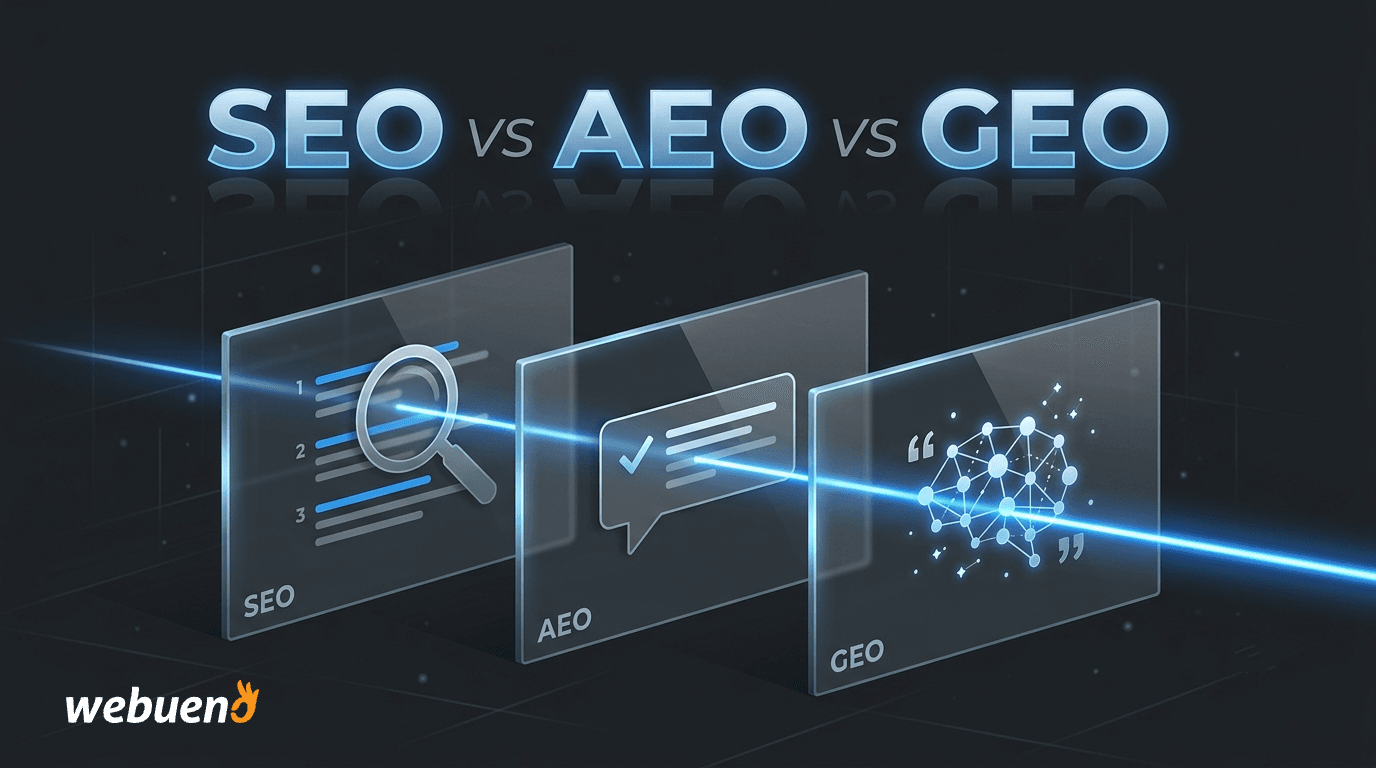
GEO and AEO. This is the newer, essential piece. As AI Overviews, ChatGPT, and Perplexity reshape search, a modern white-label partner needs a defined approach to Generative Engine Optimization and Answer Engine Optimization. If you are unfamiliar with how these differ from traditional SEO, our guide on GEO vs AEO vs SEO breaks it down. Any provider without a strategy for AI search is offering an incomplete service in 2026.
Why Agencies Use White-Label SEO
The business case is straightforward, and it comes down to a few clear advantages.
Scale Without Hiring
Building an in-house SEO team means recruiting strategists, technical experts, content writers, and link builders. That can easily cross six figures annually before you have earned a cent from it. White-label SEO turns that fixed cost into a variable one tied directly to client revenue. You only pay for delivery once you have sold the work.
Faster Time to Revenue
A specialist white-label provider already has processes, tools, and a team in place. Instead of waiting months to recruit and train, you can start delivering SEO in days. You can close a client this week and deliver next week, with no internal restructuring.
Access to Specialists
Top white-label providers employ dedicated experts across technical SEO, content, local search, link building, and now AI search optimization. You get access to that full bench of expertise without paying to keep it on your payroll.
Protect and Grow Your Brand
Because all work is delivered under your brand, clients see consistent, high-quality output from your agency. That builds loyalty, reduces churn, and lets you expand your service offering without diluting your brand.
Remove Growth Bottlenecks
Traditional agency scaling is capped by hiring. Every new SEO client requires more internal capacity. White-label SEO replaces that hiring burden with on-demand execution, so your delivery capacity scales with demand whether you win one client or twenty.
Who White-Label SEO Is Best For
White-label SEO is particularly powerful for certain types of agencies:
- Web design agencies whose clients ask for SEO after their site is built
- PPC and paid media agencies wanting to add organic search to their offering
- Social media agencies expanding into broader digital marketing
- Generalist marketing agencies that need SEO in their stack but cannot justify a full in-house team
- Solo consultants and freelancers who want to offer more without becoming a one-person bottleneck
If SEO is something your clients want or need, and building an in-house team is not realistic right now, white-label is usually the fastest path to offering it profitably.
The Economics: How Agencies Make Money With White-Label SEO
The model works financially because of the gap between wholesale and retail pricing.
Your white-label partner charges you a wholesale rate for the work. You sell it to your client at your own retail price. The difference is your margin. Because you control pricing and the client relationship, you decide your markup.
This transforms SEO from a fixed operational cost into a pure revenue-generating service. And because SEO is typically an ongoing monthly engagement, it creates recurring revenue rather than one-off project income. That recurring element is what makes it so valuable for agency growth: predictable monthly income that compounds as you add clients.
The white-label SEO market reflects this appeal. According to industry market research, the white-label SEO software market was valued at roughly $1.68 billion in 2025 and is projected to grow to around $2.88 billion by 2032, driven by agencies adopting the model as a core growth strategy rather than a backup option.
Is White-Label SEO Legal and Ethical?
Yes, white-label SEO is completely legal and ethical when done properly.
It is essentially rebranding an existing service for resale, which is standard practice across countless industries. What makes it legitimate is proper agreements: clear contracts, NDAs where appropriate, and compliance with data protection laws like GDPR, especially for agencies handling client data in regulated regions.
The ethical line comes down to the quality and methods of the work itself. A good white-label partner uses white-hat, guidelines-compliant SEO. The risk is not in the white-label model; it is in partnering with a provider who cuts corners with spammy links or manipulative tactics that could get your client penalized and damage your agency’s reputation in the process.
What to Look for in a White-Label SEO Partner
Choosing the right partner is the single most important decision in making this model work. Here is what matters most.
White-hat methods only. Your reputation rides on their work. Confirm they use ethical, sustainable SEO practices, not shortcuts that risk penalties.
A defined AI search strategy. In 2026, any partner without a clear approach to GEO and AEO is behind. Ask specifically how they optimize for AI Overviews and generative search.
Transparent reporting. You need clear, white-labelled reports you can hand directly to clients, showing real metrics and honest progress.
Genuine specialist coverage. Confirm they have real expertise across technical, on-page, local, content, and link building, not just one narrow skill.
Reliable communication. Delays and poor communication from your partner become your problem in front of the client. Responsiveness matters as much as skill.
An integrated platform. The smoothest partnerships run through one system where you can submit work, track progress, and manage everything, rather than chasing updates over scattered emails.
Scalability. Your partner should be able to grow with you, handling one client or fifty without a drop in quality.
Common Mistakes Agencies Make
A few pitfalls show up repeatedly when agencies adopt white-label SEO.
Choosing on price alone. The cheapest provider often cuts corners in ways that surface later as client problems. Value and reliability matter more than the lowest wholesale rate.
Giving up account control. The model works best when you keep client communication, positioning, and strategy in-house and plug the partner into fulfilment only. Handing over the client relationship erodes your value.
Not vetting AI search capabilities. Agencies that assume all SEO providers are equal in 2026 get caught when clients ask about AI visibility and the partner has no answer.
Overpromising to clients. SEO takes time. Setting realistic expectations protects both you and your client relationship, regardless of how good your partner is.
How Webueno Fits In
At Webueno, white-label delivery is built into how we work. Our SEO service covers the full stack: technical SEO, on-page, local, content, link building, and a defined approach to GEO and AEO for AI search, all deliverable under your agency’s brand.
Everything runs through one platform where you submit work, track progress with full transparency, and manage client sites in one place. Reports come white-labelled and ready to hand to your clients. And because we also provide managed WordPress hosting and a full range of support services, your agency can offer a complete package without building any of it in-house.
For agencies that want to turn our services into recurring revenue, our Affiliate Program lets you earn on hosting and add-ons while you add your own margin on the services you resell.
Should Your Agency Use White-Label SEO?
The honest answer depends on your situation. White-label SEO makes sense when:
- Your clients want SEO, and you cannot deliver it in-house
- Building and maintaining a full SEO team is not financially realistic right now
- You want to add SEO as a recurring revenue stream quickly
- You want to expand your service offering without increasing operational complexity
It makes less sense if you already have a strong, fully-staffed in-house SEO team that has spare capacity, or if you prefer to keep every part of delivery under your own roof for strategic reasons.
For most agencies, though, the math is compelling: white-label SEO removes the biggest bottleneck to growth, which is hiring, and replaces it with on-demand capacity you only pay for when you have already sold the work.
Turn SEO Into a Growth Engine
White-label SEO has moved from a backup option for small agencies to a core growth model for modern digital businesses. It lets you say yes to SEO opportunities the day they appear, deliver expert work under your own brand, and build recurring revenue without the cost and risk of hiring.
The key is choosing the right partner: one that uses white-hat methods, has a real strategy for AI search, reports transparently, and can scale with you.
If you are an agency looking to add or expand SEO under your own brand, Webueno’s white-label SEO and support services give you the full delivery capacity, transparent reporting, and integrated platform to do it profitably.
Become a Webueno partner and start reselling SEO
Frequently Asked Questions
What is white-label SEO in simple terms?
White-label SEO is when a specialist provider does SEO work behind the scenes while your agency presents it to clients under your own brand. The client sees only your agency and never knows a third party did the work. It lets agencies offer SEO without building an in-house team.
Is white-label SEO the same as outsourcing?
Not exactly. All white-label SEO is outsourced, but white-label specifically means the work is delivered unbranded so you can resell it as your own. General outsourcing does not always include the rebranding element that defines white-label.
Is white-label SEO legal?
Yes. White-label SEO is completely legal and ethical when done with proper contracts, NDAs where appropriate, and compliance with data protection laws. It is simply rebranding a service for resale, which is standard across many industries. The key is ensuring the provider uses white-hat methods.
How do agencies make money with white-label SEO?
Agencies pay a wholesale rate to the provider and sell the service to clients at their own retail price. The difference is the agency’s margin. Because SEO is usually an ongoing monthly service, it creates recurring revenue that grows as the agency adds clients.
What does white-label SEO include?
A full white-label SEO service typically includes technical SEO, on-page optimization, keyword research, content creation, local SEO, link building, transparent reporting, and increasingly GEO and AEO for AI search visibility. The exact scope depends on the provider and the client’s needs.
How do I choose a white-label SEO partner?
Look for white-hat methods, a defined AI search (GEO/AEO) strategy, transparent white-labelled reporting, genuine specialist coverage across all SEO disciplines, reliable communication, an integrated platform, and the ability to scale with your agency. Avoid choosing on price alone.
Can small agencies and freelancers use white-label SEO?
Yes. White-label SEO is especially valuable for small agencies, solo consultants, and freelancers because it lets them offer professional SEO without hiring. It removes the one-person bottleneck and lets them take on more clients without expanding their team.