If you run a marketing or web design agency, WordPress requests never stop coming. A client’s contact form stops sending leads. Another wants a new landing page live by Friday. A third site slowed down after a plugin update, and the client wants to know why. None of these requests are big, but together they eat the hours your team should spend on strategy, design and selling.
That is the problem white-label WordPress support solves. This guide explains what it is, how it works day to day, what it should include, how agencies price it and earn from it, and how to choose a partner you can trust with your clients.
What Is White-Label WordPress Support?
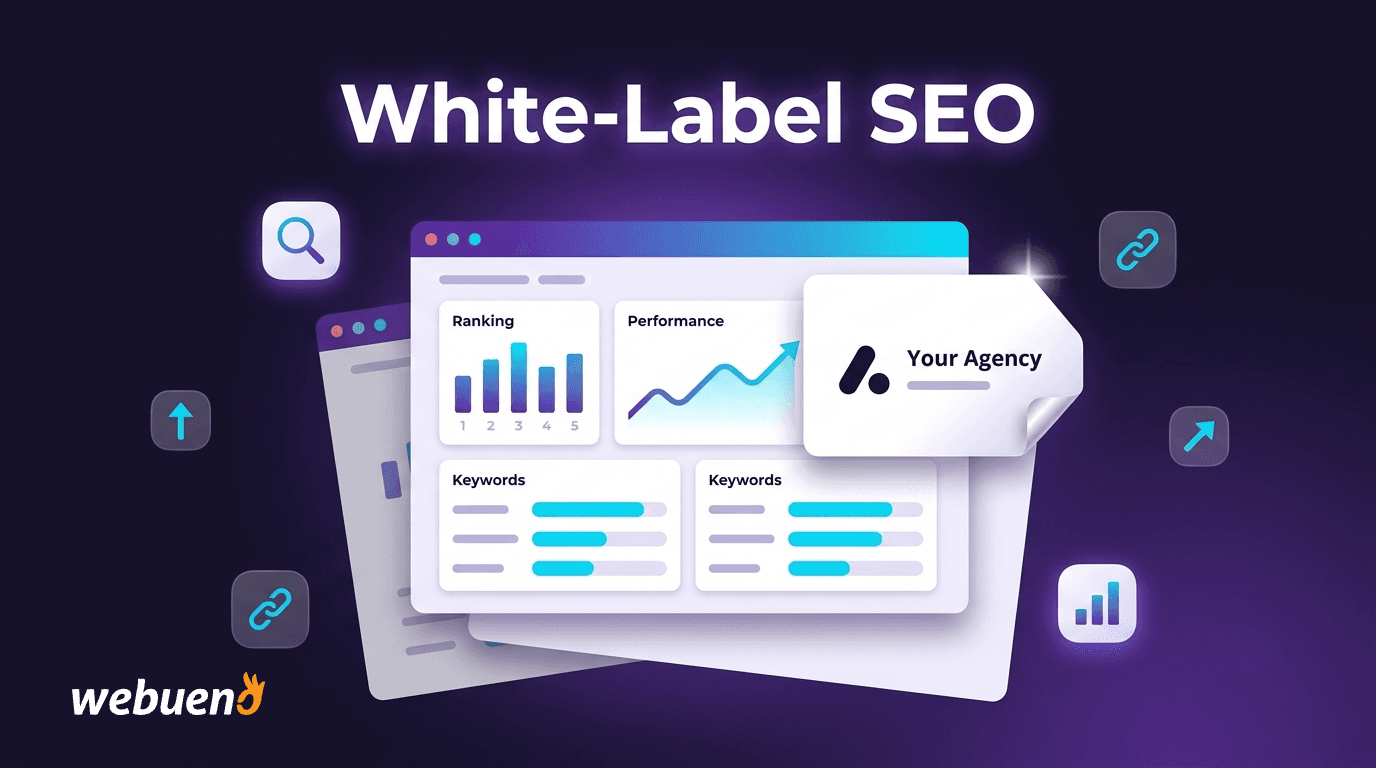
White-label WordPress support is technical WordPress work done by an outside team and delivered under your agency’s brand. Your client asks you for help, your partner’s developers do the work behind the scenes, and you present the result as your own. The client keeps dealing with you, gets updates from you and pays you.
The word “white-label” is the important part. All white-label support is outsourcing, but not all outsourcing is white-label. A freelancer who emails your client directly, signs work with their own name or sends invoices on their own letterhead is not white-label. A true white-label partner stays invisible: no branding, no direct contact with your client unless you ask for it, and reporting you can pass on as your own.
If you already know how this works for search, the model is the same as white-label SEO, applied to WordPress development and support instead of rankings.
Why Agencies Use White-Label WordPress Support
Most agencies do not start out planning to outsource. It usually happens when one of these problems becomes hard to ignore.
Developer Capacity Does Not Match Demand
WordPress work comes in waves. One month you have three site builds and dozens of small requests, the next month almost nothing. A full-time developer is either overloaded or underused. A white-label partner lets you scale up during busy months and down during quiet ones, without hiring or letting anyone go.
Small Requests Are Hard to Price and Easy to Lose Money On
A “quick fix” that turns into three hours of debugging is where agency margins disappear. When a partner tracks time per task and bills only for the work done, you know exactly what each request cost you and can bill your client with a clear margin on top.
Clients Expect One Agency for Everything
Clients who hire you for design or marketing expect you to handle their website too. If you say no, they find someone else, and that someone may end up taking the whole account. White-label support lets you say yes to hosting, maintenance, fixes and development without building those teams yourself.
Specialist Skills Are Expensive to Keep In-House
Malware cleanup, speed optimization, custom plugin work, API and CRM integrations: each needs a different specialist. Keeping all of them on payroll is not realistic for most agencies. A white-label team gives you access to the whole bench and you pay only when you use it.
How White-Label WordPress Support Works
Most partnerships follow the same simple flow. The details differ between providers, but the roles stay the same.
- Your client sends a request. It reaches you the same way it always has, by email, phone or your project tool.
- You pass it to your partner. You open a ticket with the details, access and any deadline. The client does not see this step.
- The partner’s team does the work. A developer picks up the ticket, asks questions if needed, completes the task and logs the time spent.
- You review and deliver. You check the result and tell your client it is done, under your brand, at your price.
The key principle is that the client relationship stays with you. You decide the price, you own the communication, and you keep the account. The partner is the engine; your agency is the brand.
What White-Label WordPress Support Should Include
A good partner covers the full range of work a WordPress site needs after launch, not just one narrow skill. Here is what to expect.
| Service Area | Typical Tasks |
|---|---|
| Troubleshooting and fixes | Critical errors, white screens, broken forms, plugin and theme conflicts, update problems |
| Content and design changes | New pages, layout edits, banners, menus, mobile fixes, page builder work |
| Speed optimization | Caching, image optimization, Core Web Vitals, server response time |
| Security | Malware cleanup, WordPress hardening, firewall setup, recovery after a hack |
| Maintenance | Core, plugin and theme updates, backups, uptime monitoring, monthly reports |
| Hosting | Managed WordPress hosting, migrations, SSL, server configuration |
| Development | Custom features, plugins, integrations with CRMs, payment and booking tools |
| SEO support | Technical SEO fixes, structured data, on-page changes |
You do not need every service from day one. What matters is that the partner can handle the full range when a client needs it, so you are not managing five different vendors.
For a closer look at the support side on its own, see our guide to WordPress support services.
White-Label Support vs Freelancers vs In-House Developers
Every agency ends up choosing between these three options, often a mix of them. Each has a place.
| White-Label Partner | Freelancer | In-House Developer | |
|---|---|---|---|
| Cost structure | Pay per hour or credit used | Hourly or per project | Fixed salary and benefits |
| Capacity | Scales with demand | Limited to one person | Limited to team size |
| Skill range | Full team across specialties | Usually one or two skills | Depends on who you hire |
| Branding | Fully under your brand | Often visible to clients | Your brand |
| Availability | Team coverage, no single point of failure | Holidays and sick days stop work | Holidays and sick days stop work |
| Management effort | Low, through a ticketing system | Medium to high | High |
| Best for | Ongoing client support at scale | Occasional one-off projects | Agencies with constant, predictable volume |
Freelancers are a good fit for a single project with a clear scope. In-house developers make sense once your volume is high and steady. For everything in between, which is where most agencies spend most of their time, a white-label partner is usually the most flexible option.
How Agencies Price White-Label WordPress Support
There is no single right pricing model, but most agencies use one of three approaches.
Hourly Resale With a Margin
You pay your partner an hourly rate and charge your client a higher hourly rate. This is the simplest model and works well when requests are unpredictable. It only works if your partner tracks time accurately and shows you what each hour was spent on.
Monthly Care Plans
You bundle maintenance, a set number of support hours and hosting into a monthly plan for each client. Clients like the predictable bill, and you get recurring revenue. The risk is scope creep, so define clearly what the plan includes and what is billed separately.
Fixed-Price Projects
For larger, well-defined jobs, such as a redesign or a new feature, you quote a fixed price. Your partner estimates the hours, you add your margin and any project management time, and the client gets one number.
Whichever model you choose, three numbers decide whether the service makes money: what you pay per hour, what you charge per hour, and how much non-billable time you spend managing requests. A partner with a clear ticketing system and accurate time tracking keeps that third number low.
What to Look for in a White-Label WordPress Partner
Your partner’s work becomes your agency’s reputation. These are the questions worth asking before you hand over your first client.
Is the Work Truly Unbranded?
Ask how they communicate, what branding appears on reports, and whether their developers ever contact clients directly. Everything the client sees should carry your name.
How Is Time Tracked and Reported?
You need to see what was done and how long it took for every task, ideally with proof of work. Without this, you cannot bill clients confidently or spot when a task is taking longer than it should.
How Fast Do They Respond?
Ask for response times in writing, and ask what happens with urgent issues such as a site being down or hacked. A clear process for emergencies matters more than a low hourly rate.
Who Owns the Accounts and the Data?
Hosting, domains and client accounts should stay in your agency’s or your client’s name. Avoid partners who hold everything in their own name, because leaving them becomes difficult.
Are There Long Contracts or Monthly Minimums?
Flexible partners let you pay for what you use. Long contracts and monthly minimums shift all the risk to your agency, especially in quiet months.
Can You Earn More Than a Margin on Hours?
Some partners also share revenue from hosting and add-ons your clients use. That turns every site you manage into a small source of recurring income.
Red Flags to Avoid
- Prices that look too good to be true, especially “unlimited” support for a low flat fee
- No ticketing system, with requests handled over scattered emails and chat messages
- No time tracking or vague invoices that do not show what was done
- Developers who sign work with their own names or contact your clients
- Hosting and accounts kept in the provider’s name
- No clear process for emergencies and no written response times
- Reluctance to work on sites they did not build
How Webueno Handles White-Label WordPress Support
Webueno is built for agencies that want to offer WordPress services under their own brand. Here is how it works in practice.
- Ticketing and projects in one place. Every request goes through the ticketing and project system, so each task is logged, assigned and tracked.
- Time tracked per task. Every task has tracked time with screenshot proof of work, so you can see exactly what was done and bill your clients with confidence.
- Credit-based billing. One credit equals one hour of work. The standard rate is $42 per hour, and larger credit bundles lower it by up to 21%, to $33.18 per hour. There is no long-term contract and no monthly minimum.
- Your own margin on support. Agencies set a margin on top of the base rate. When your clients buy credits through your white-label agency account, they pay the price you set, and you earn on every hour of work.
- 10% recurring commission on hosting. Agencies earn 10% on eligible hosting and hosting add-ons their clients buy, such as maintenance and daily backups, every month the client stays subscribed.
- One team for everything. Troubleshooting, design, speed optimization, maintenance, malware cleanup, development and integrations are handled by the same team.
Agencies that would rather refer clients than manage them can also look at the reseller program.
Grow Your Agency Without Growing Your Payroll
Clients want one agency they can call for everything, and WordPress requests are a big part of that. White-label support lets you say yes to every request, keep your margins clear and keep the client relationship firmly in your hands, without hiring a developer for every skill your clients need.
The right partner works invisibly, tracks every hour, responds quickly and lets you leave if it is not a fit. Get those basics right and WordPress support becomes a profitable, recurring part of your agency rather than a distraction.
Create a free Webueno agency account and start offering WordPress support under your brand.
Frequently Asked Questions
What is white-label WordPress support?
White-label WordPress support is WordPress work such as fixes, updates, design changes, speed optimization and development, done by an outside team and delivered under your agency’s brand. Your client deals only with you.
Will my clients know I am using a white-label partner?
Not if the partner is truly white-label. The work, reports and communication all go through your agency, and the partner does not contact your clients unless you ask them to.
How much does white-label WordPress support cost?
It depends on the model. Many providers charge an hourly rate, others sell monthly plans or fixed-price projects. At Webueno, one credit equals one hour of work at $42, and larger credit bundles reduce the rate by up to 21%.
How do agencies make money from white-label support?
Agencies add a margin on top of the partner’s hourly rate, sell monthly care plans, or quote fixed-price projects. Some partners also share recurring revenue from hosting and add-ons, which adds income from every site you manage.
Is white-label support the same as WordPress maintenance?
No. Maintenance is scheduled preventive work such as updates, backups and monitoring. Support covers on-demand requests such as fixes, changes and new features. Most agencies offer both, and a good partner handles both.
Can a white-label partner work on sites my agency did not build?
Yes. A good partner reviews the site setup first and then handles requests on any WordPress site, whoever built it.
Do I need a long-term contract to use white-label support?
Not with every provider. Credit-based and hourly models let you pay only for the work you use, without monthly minimums. This is safer for agencies whose workload changes from month to month.
What is the difference between white-label support and a reseller program?
With white-label support, you sell the service under your brand and manage the client. With a reseller program, you refer clients to the provider, who then manages them, and you earn a share of the profit.